

How To Draw Furry Feet
Styles of paws in furry art
A lot of different styles for paws be in furry art. The range goes from true digitigrade animal paws to near-man feet (with toenails and furless soles), and at that place are a lot of nice styles inbetween. This folio discusses some of the decisions that a furry artist or player has to brand, and shows some examples on how to draw paws. Continue in mind that paws are an of import way of expressing a hirsuite's personality, mood and species.
Hindpaws (footpaws)
Leg shape: Digitigrade or plantigrade?
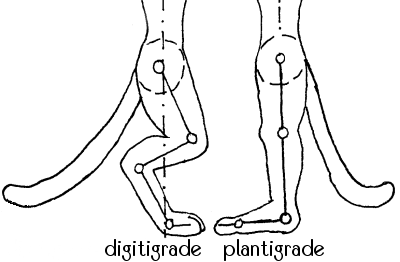
The showtime thing to decide when drawing (or designing a furry character concept) would exist the leg shape. Digitigrade legs take their heels off the ground, which has an outcome for the unabridged leg - it usually cannot exist stretched out, the whole character has a more dynamic position and would probably take trouble keeping balance when standing nevertheless on ii legs. Plantigrade legs tin can be quite humanoid in proportions, so they tin can be stretched out totally, leading to a completely upright continuing position. When drawing digitigrade paws, have into account that these take to conduct the whole weight if the furry is on two legs, and then draw them bigger than they would be if the furry was on iv legs. Information technology is also important to find the correct "balance": when standing, the center of gravity should be vertically above the paws. The picture compares digitigrade and plantigrade legs, y'all can see the "line of gravity" on the digitigrade furry.
Toes: how many, which shape?
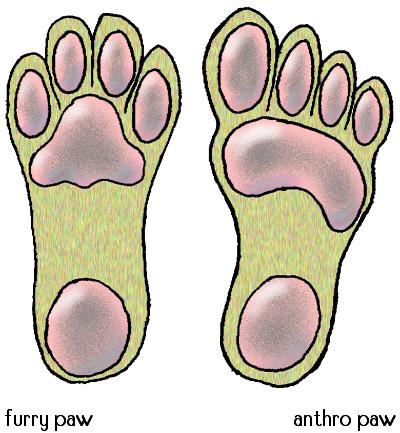
Many artists requite their furries the same number of toes equally the respective creature would take in existent life. Some, especially those with a more than "toonish" fashion, reduce the number of toes to three; others (those with a highly anthropomorphic style) give all furries five toes, regardless of species. The forepart part of the foot can be rounded like a furry hand or accept a pronounced big toe as humans have information technology (or anything inbetween). The pic shows 2 different plantigrade paws with pads - the i on the left (symmetric) is based on a feline hand, with the addition of a heel pad; the 1 on the right is more anthropomorphic in shape, with a big toe as humans have them (only only four toes). As ofttimes in hirsuite art, this paw is wider and shorter than human feet would usually be.
Claws
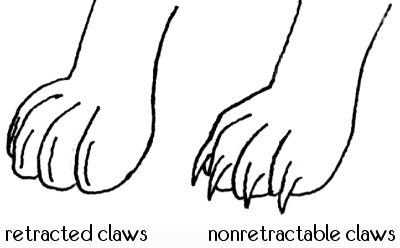
Some artists give their furries realistic claws (for case, strong fixed claws for canine species, sharp retractible claws for felines). The claws of felines are usually retracted unless in use (when holding on to something, climbing, stretching, scratching, attacking). In that case, the clawsheaths on the toetips are visible, peradventure with a bit of the clawtips. Toonish paws oft have no visible claws at all (or claws simply if they are in use, as a form of expression, but normally completely invisible). A few artists even give their furries humanoid toenails - this usually in combination with the same "big toe" configuration. The picture on the right compares two digitigrade paws - on the left (feline), the claws are retracted (the clawsheaths announced as vertical lines on the toes); the right has nonretractable claws and might belong to a cheetah or canine.
Soles: padded, hirsuite or furless?
Hirsuite paws often, simply not always, have pads of tough, furless skin, giving them good traction and optimal sensitivity. Each toe has an oval pad, the center of a digitigrade paw is formed past a big pawpad which is differently shaped, according to the species. If a hirsuite artist draws a plantigrade footpaw which looks like a digitigrade manus in front end, usually a heel pad is added (as that carries a adept part of the weight in plantigrade paws). Some artists nevertheless omit the heel pad, so that the furry "walks on fur" (oftentimes such paws are semi-digitigrade: walking digitigrade, simply using heels for back up when standing). See Akai'southward example beneath for ane way to do it. (Past the way, furries who walk barefoot a lot in real life volition experience that their feet develop pronounced pads, including the heelpad, much like a furry paw!) Some other arroyo is to omit the pads and give the paws a smooth surface with the same color of the balance of the fur. See Toma'southward example of "costly paws" below. 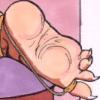
Some artists requite their furries completely furless soles, without pronounced pads - this is again a sign of high anthropomorphism. The film on the right (by MouseHouse) shows an example of this style.
Fuzzyness
Depending on the species, y'all can either add a lot of fur (for species adapted to coldness, such equally polar bears or snow leopards) especially around and between the toes, or have rather sparsly furred paws (equally many rodents accept them).Forepaws (handpaws)
Opposable thumbs
The paws of many four-legged species are not very well suited for holding objects. So, a two-legged hirsuite unremarkably has more "hand-shaped" paws to be able to grab objects. A number of species already accept the right paw shape for this.Fingers - how many, how long?
Once again, toons often have a smaller number of fingers - iv-fingered handpaws tin can oftentimes exist seen (easier to draw?), fifty-fifty three-fingered handpaws, though this tends to wait rather foreign. Five-fingered handpaws, just equally the forepaws of all felines for example are five-fingered, are still widespread.Another trend for furry handpaws is to brand the fingers shorter than human fingers would exist. For cats especially, it has to be like this if the fingerclaws should yet be retractable.
Claws and pads
Unremarkably the configuration of claws and pads is the same on the forepaws and hindpaws of a given furry - though the pads on the handpaw fingers of exclusively 2-legged furries are usually not as tough, equally they are not walking on them.Examples
How to draw a furry footpaw - by Akai
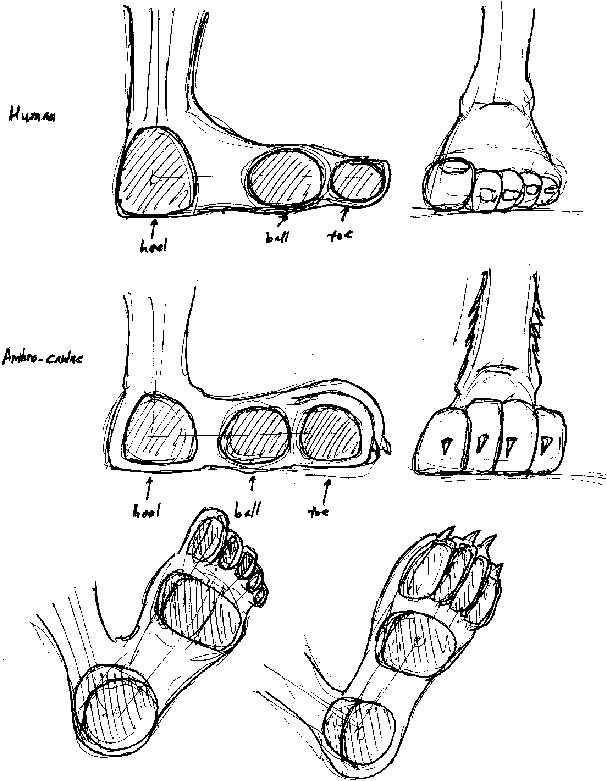
Akai compares in this drawing the plantigrade footpaw of an anthro-canine to a man pes. As a help for drawing, the foot is divided into ovoid volumes for the heel, the ball and the toes (which are corresponding to the pads on the furry paw). Yous tin see the divergence in proportions: the toes of the furry paw are bigger and all of about the same size.
Plush paws - past Toma
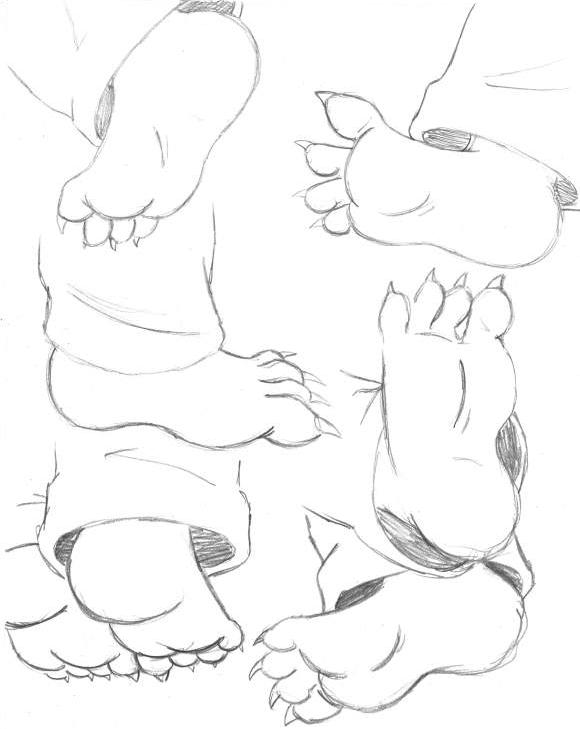
Toma shows us numerous angles on his way of four-toed, clawed "plush paws" in this drawing - they are called "plush paws" equally they don't have pronounced pads. You can see the slight asymmetry (the divergence between left and right feet can conspicuously be seen), the slight wrinkles on the soles and the expressivity of spreading toes.
Return to the Free Paws page.

Source: https://www.freepaws.org/art.html
Posted by: collinshickinurpoll.blogspot.com
0 Response to "How To Draw Furry Feet"
Post a Comment